



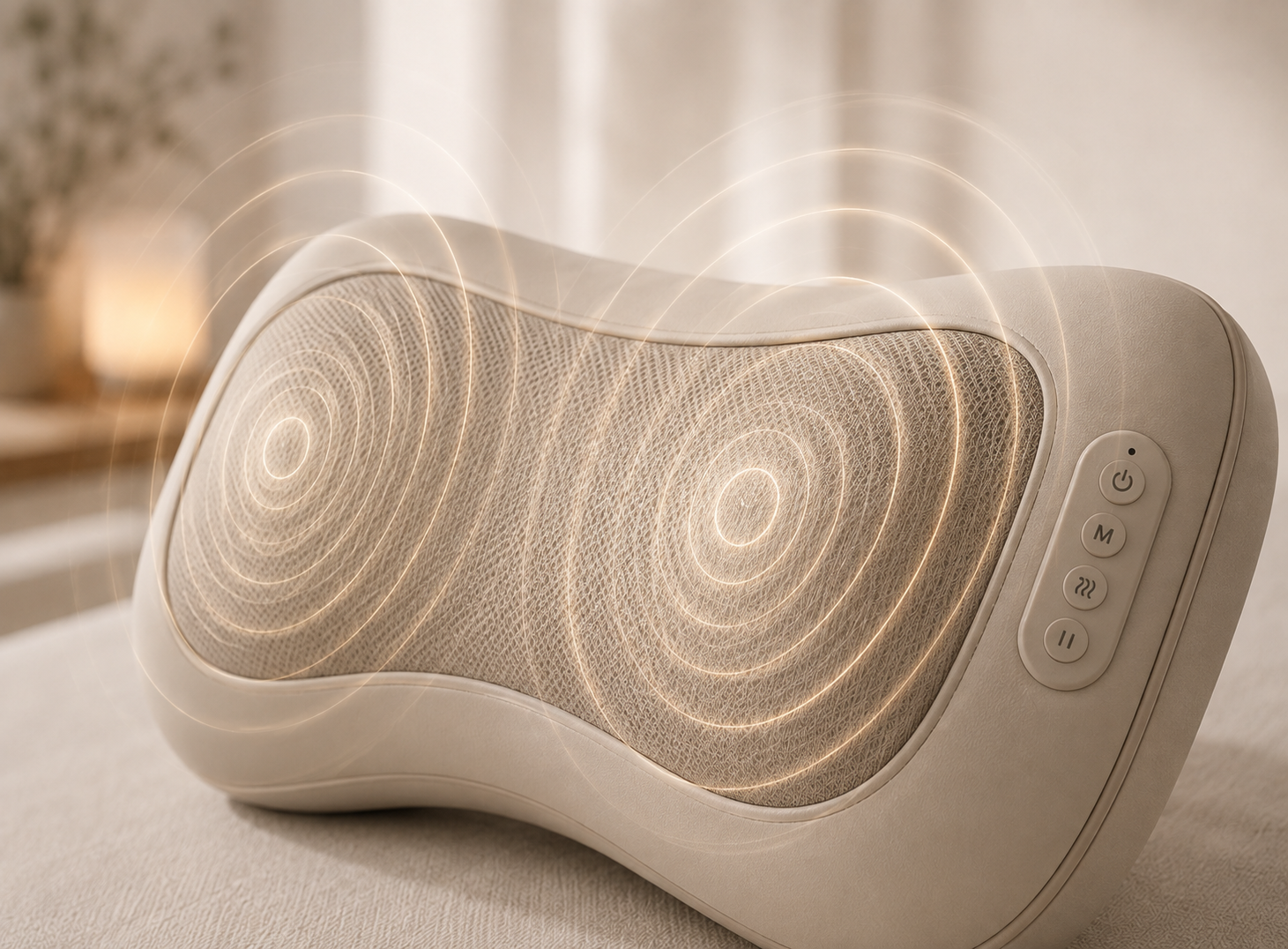
PEMF stands for Pulsed Electromagnetic Field. The device generates variable pulses using coils placed inside a mat, cushion, or applicator.
The field is not felt like a mechanical massage, which is why manufacturers often show it using wave visualizations.
The technology requires careful communication as research involves various parameters and applications, and the results are not uniform.
What is a pulsating electromagnetic field?
An electromagnetic field is generated around a conductor through which current flows.
In a PEMF device, the coil is powered by short pulses, causing the field to appear and disappear according to a programmed pattern.
The user is not connected to electrodes, and the technology does not intentionally induce muscle contraction like EMS.
Why is PEMF combined with regeneration?
PEMF has been studied in many clinical and sports contexts, but the scope of evidence depends on the specific indication.
Some medical devices have very specific applications, but this does not mean that every wellness product provides an identical effect.
Available reviews show both promising results and a lack of sufficient evidence for broad promises.

What is the session like?
The user lies on the mat, rests their body on a pillow, or places the applicator near the selected body part.
After setting the program, the device generates pulses for a specified time. The field itself may not produce a distinct sensation.
If the product combines PEMF with heating or vibration, these functions may be directly perceptible.
PEMF and static magnet
A regular magnet produces a static magnetic field. PEMF generates a time-varying field created by electrical impulses in a coil. These concepts should not be conflated, nor should it be suggested that every pillow with a magnet is a PEMF device.
Who should be careful?
Pacemaker or defibrillator
In the case of implanted cardiac devices, PEMF therapy may only be used with the consent of a physician.
Insulin pump and other active implants
Individuals with implanted electronic devices should consult their physician before undergoing PEMF therapy.
Pregnancy
The use of PEMF therapy during pregnancy requires special caution and prior medical consultation.
Metal implants
In the case of some metal implants, you should consult your doctor before starting therapy.
Products in this category
FAQs
For more information, please visit our FAQ page.
Is PEMF a massage?
No. PEMF uses a pulsating electromagnetic field. The device may have an additional massage function, but these are separate features.
Do you need to feel something during a session?
Not always. The field may be imperceptible. Sensations may come from additional heating or vibration.
Is PEMF EMS?
No. EMS transmits impulses through electrodes and can cause contractions, while PEMF generates a field using coils.
Is every pillow with a magnet a PEMF?
No. PEMF requires electronically generated pulses. A static magnet is not PEMF technology.
Can it be used with a pacemaker?
Not without medical consultation. Electromagnetic fields can affect active electronic implants.